
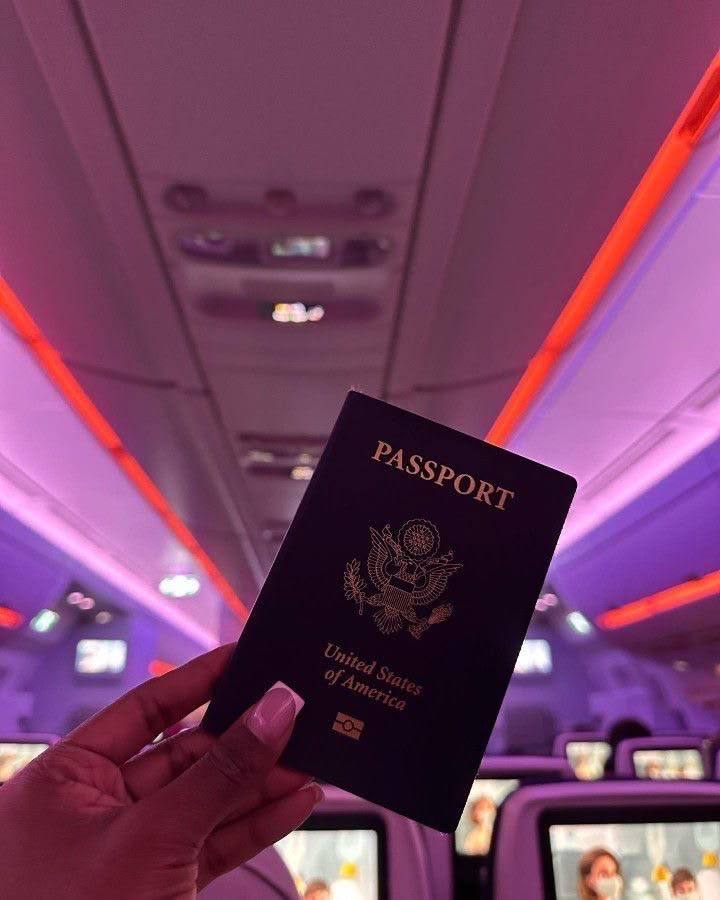
If you’re Nigerian and you see the title How I Researched My Way Out of Nigeria, there’s a good chance you’ve already started making assumptions.
Maybe you think I discovered a scholarship opportunity.
Maybe I found a job abroad, secured a visa, and finally joined the growing number of Nigerians who decided their future looks better somewhere else, and trust me it does😊
Or maybe you think this is another Japa story.
Well, sorry to disappoint you.
I didn’t leave Nigeria.
Oh and how I wish your thoughts were true, but one day one day that too shall come
This is one story I’ve wanted to tell for the longest time, and it all happened in 2021. It’s the story of how….
I researched my way into cheese.
Yes, cheese.
More specifically, 100 cheeseboard recipes.
And before we continue, there’s one small detail you should know about me.
I had never eaten cheese before.
Not once.
Yet, somehow, I found myself with a foreign gig that required me to write about it.
Life has a funny way of asking you questions you have absolutely no business answering.
And sometimes, the answer is to open Google. (Right now, I think it’s ChatGPT )
The Day Cheese Became My Problem
When I got my first foreign gig, I was excited.
Getting an opportunity to work with someone outside your immediate environment can feel like a big deal.
Did I say “can feel like” it was a big deal? Finally, I was getting paid in dollars for the first time in my life.
But then the tasks came.
Write 100 cheeseboard recipes.
One hundred! I repeat, one hundred
Not five. Not ten. Not a quick article about why cheese is delicious.
One hundred ideas centred on something I had never eaten.
Now, if you’ve never encountered a cheeseboard, allow me to paint a picture.
It’s essentially an arrangement of cheeses, crackers, fruits, nuts, and other accompaniments, usually presented beautifully for people to enjoy together.
At least, that is what my research taught me.
Before that assignment, the closest I had come to understanding the cheeseboard experience was probably seeing pictures of beautifully arranged food online.
As Nigerians, we could put together an impressive spread for a party. We don’t play with food when there’s a celebration involved.
But a cheeseboard?
That was a different department entirely.
Imagine giving someone who has never eaten Nigerian jollof rice an assignment to develop 100 creative ways to serve it.
They might eventually figure it out through research. But initially, they’d have a lot of questions.
That was me.
I was about to write confidently about an experience I had never personally had.
And I had to figure out how.
Google, Please Don’t Embarrass Me
I had two options.
Option one: admit defeat.
“I am terribly sorry, but I cannot complete this gig because cheese and I have never met.”
Or
Option two: learn.
I chose option two.
Mind you this was 2021 and there was no ChatGPT, no Claude, no Meta AI, or any AI tool you can think of, and even if they were it hasn’t been known in this part of my world.
But I started researching cheeseboards, the types of cheese people used, the foods that paired well with them, how boards were arranged, and the different occasions they could be created for.
I explored recipes on YouTube, combinations on cheese-producing companies’ websites, presentation styles, and themes from different parties and seasons.
I looked at what people were making and thought about how I could develop different ideas without simply repeating the same arrangement 100 times.
And that was when I realised something.
Research isn’t just about finding information. It’s about learning how to make sense of information you’ve never encountered before.
I couldn’t rely on personal experience, so I had to pay attention to other people’s experiences, established recipes, expert recommendations, and the details that made one combination different from another.
I had to understand the subject well enough to produce something useful.
I couldn’t just write:
“Put some cheese on a board. Add crackers. Congratulations, you have a cheeseboard.”
Well, I could have.
But I doubt I would have been paid to produce 99 more similar arrangements.
So I kept learning.
And eventually, I delivered the work.
A Nigerian who had never eaten cheese had successfully researched her way through a cheeseboard gig.
If that isn’t a plot twist, I don’t know what is.
The World Is Bigger Than Your Experience
Looking back, the most interesting part of that assignment wasn’t the cheese.
It was what the experience revealed about knowledge.
I grew up in an environment where cheeseboards weren’t a normal part of everyday life.
That meant I had limited personal exposure to them.
But limited exposure didn’t have to mean permanent ignorance.
I could learn about cheeseboards without growing up around them.
I could study the food culture of people whose daily experiences differed from mine.
I could learn about something that seemed foreign to me and use that knowledge to solve a real problem.
And this applies to far more than food.
Think about how many things exist beyond your immediate environment.
There are business models you’ve never seen.
Industries you know very little about.
Careers you didn’t know existed when you were growing up.
People solving problems you’ve never encountered.
Sometimes, we confuse what is unfamiliar to us with what is impossible for us to learn.
You might not have grown up around business owners.
But you can study how businesses operate, learn from people with relevant experience, and understand the principles behind their decisions.
You might not have travelled outside your country.
But you can learn about other cultures, markets, and opportunities without waiting until you have a passport full of stamps.
Your current reality is where you are starting from.
It doesn’t have to be the boundary of your curiosity.
The goal isn’t to pretend you know everything.
The goal is to become someone who knows how to learn.
Someone who understands that not knowing something today doesn’t automatically disqualify them from learning it tomorrow.
Sometimes, the Opportunity Comes Before the Knowledge
This is the part I find particularly interesting.
We often imagine that we must know everything before we pursue an opportunity.
We want to feel qualified, prepared, experienced, and completely confident.
We want to be able to answer every question before we raise our hands.
But sometimes, an opportunity arrives before we feel ready.
Sometimes, the assignment comes first, and the research follows.
Sometimes, you have to learn a new tool while doing the job.
Sometimes, the only way to discover what you’re capable of is to accept a challenge that forces you to find out.
That doesn’t mean you should lie about your abilities or accept responsibilities you cannot safely handle.
It means that when the gap is something you can realistically learn, you shouldn’t automatically reject yourself on someone else’s behalf.
You may not have the experience yet.
But do you have the willingness to learn?
Can you find reliable information?
Can you ask questions?
Can you practise, seek feedback, and improve?
Can you be honest about what you don’t know while working to close the gap?
Those questions are often more useful than asking yourself whether you’ve done everything before.
Because if I had decided that my lack of personal experience with cheese meant I couldn’t write about cheeseboards, I might have walked away from that opportunity before even attempting it.
Instead, I researched.
And I learned something about myself in the process.
So, Did I Actually Research My Way Out of Nigeria?
Not geographically.
I’m still here.
But that assignment took me beyond the limits of what I knew.
It reminded me that the world contains opportunities connected to knowledge, skills, and experiences that may not be readily available in our immediate surroundings.
And it showed me that I didn’t have to wait until I had personally experienced everything before I could begin learning about it.
Sometimes, the internet can introduce you to a world you haven’t seen.
A book can teach you something your environment never did.
A conversation can change what you believe is possible.
And a seemingly ridiculous gig about 100 cheeseboard recipes can teach you a lesson about professional growth.
So, no, this isn’t a Japa story.
It’s a story about a Nigerian woman who had never eaten cheese, got paid to write about cheeseboards, and discovered that sometimes the distance between what you know and what you need to know can be crossed with curiosity, research, and a willingness to learn.
Your environment may determine what you’re exposed to. It doesn’t have to determine how far your knowledge can travel.
And if you ever find yourself wondering whether you can learn something beyond your current reality, remember this story.
Now, if you’ll excuse me, I have a very important question to answer.
After all that research, guess how much I was paid? 😁
But on the bright side, It’s been 5 years now and I finally tried some cheese.
This was lengthier than I expected 😥
And if you ever got to this point and in whatever year it is you are and by any means you found a way to contact me. I have “something” for you, and if you are from the future, please find my descendants. I am sure they will do the needful. 😁
