
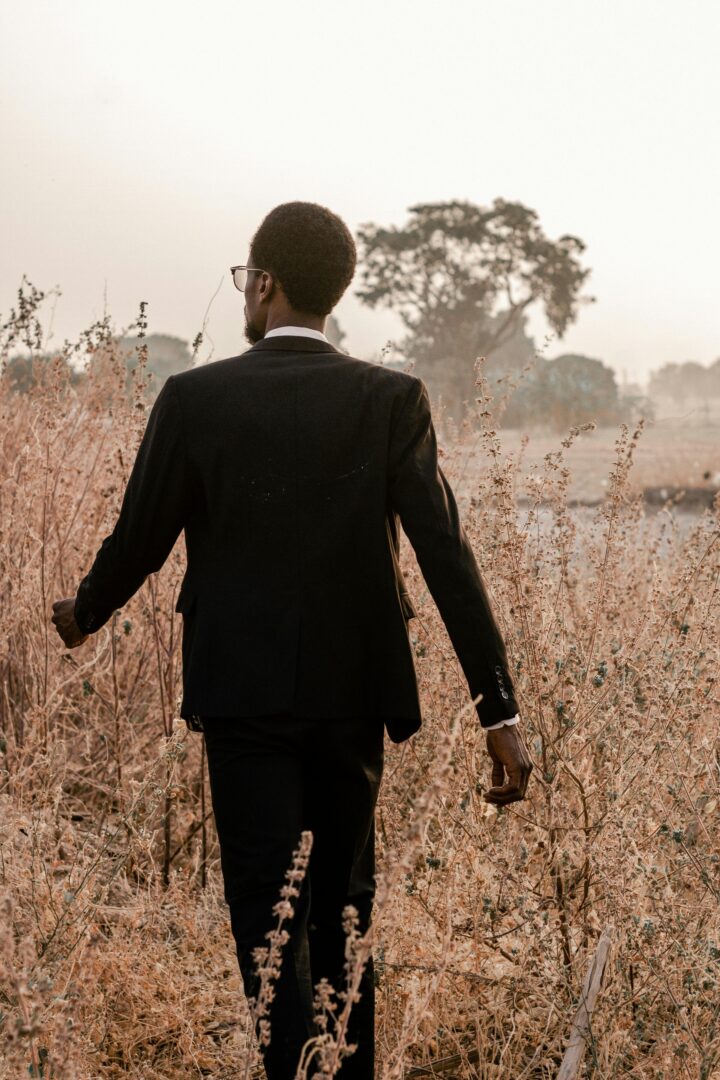
Growing up, there was a popular saying I heard quite often: There is nothing new under the sun.
I knew the statement existed. I had heard it countless times, and I knew it was biblical. But for some reason, I struggled to fully comprehend it. Not because I doubted it, lacked faith or questioned the wisdom behind it. I simply couldn’t wrap my head around it.
How could there be nothing new under the sun? With so many people, different backgrounds, different experiences, different generations and an endless stream of possibilities, how could everything that could ever be thought of, imagined or created have already existed in one form or another?
But before I get into that, there is something you should know about me.
I consider myself a realist. I see things for what they are, and I am also a deep thinker. I tend to question things, observe patterns and reflect on experiences beyond what is immediately apparent. I don’t always have much to say, but my mind is rarely idle.
I think this explains why that particular statement stayed with me for so long. I couldn’t just accept it as a popular saying, even though I knew its biblical significance. I wanted to understand it. I wanted to see how such a profound statement could hold true in a world where people are constantly creating, discovering and experiencing new things.
It took me a while to understand it. Interestingly, my understanding didn’t come from reading more books or listening to someone explain the scripture. It came from life itself.
A few years ago, I began to notice something.
There were moments when I would sit quietly, think about something and suddenly arrive at an idea that felt so original. I would get excited, almost convinced that I had stumbled upon something nobody had ever thought of. Something entirely new. Something that, if properly explored, could be extraordinary.
Only to discover, sometimes the very next day, that someone had already thought about it. Someone had already built it. Someone was already implementing it, perhaps even doing a better job of it than I had imagined.
It happened more than once.
And every time, I found myself asking the same question: Really? Has someone actually thought about this before me?
Then came the realisation.
There really is nothing new under the sun.
Interestingly, I began to notice this even in the fashion world.
Growing up, I remember some of the clothes our fathers and grandfathers wore. The Kembe, Dashiki and those wide-legged trousers that were fashionable in their time. Then, as the years went by, fashion evolved. Pencil trousers, slim-fit jeans and all sorts of modern styles took over. Some of those older styles gradually became associated with being old-fashioned, and nobody particularly wanted to be caught wearing them.
Funny enough, I never quite subscribed to the pencil-trouser trend. I have always preferred my trousers a little bigger, and I honestly cannot explain why. I just liked them that way.
But look at what is happening today. Some of those styles we once considered outdated are finding their way back into fashion. Loose-fitting trousers, oversized clothing and traditional-inspired designs are becoming fashionable again.
Only this time, they come with a different touch. Better cuts, different fabrics, modern combinations and a fresh presentation.
You look closely and realise that what we are celebrating as a new fashion trend isn’t entirely new. It is a familiar style returning with a different identity and a better presentation.
I even remember seeing one of my grandfather’s clothes at home and thinking it would make a fine addition to my wardrobe. Unfortunately, my uncle doesn’t seem interested in letting me have it. But that’s a story for another day!
And there it is again: nothing new under the sun. Sometimes, what we call a new trend is simply something old finding its way back into relevance.
Think about it. The things we celebrate today as groundbreaking innovations often have roots in ideas that existed long before us. What changes is the approach, the execution, the technology, the environment and sometimes, simply the person willing to take the idea further.
We improve. We combine. We modify. We discover new applications for existing knowledge. We give old ideas new expressions.
What one generation imagined, another develops. What one person attempted and abandoned, another revisits and perfects. What was once considered impossible becomes ordinary with time.
And that is the beauty of human existence.
We are constantly building on what came before us, even when we don’t realise it. Sometimes, we think we are starting something entirely new when, in reality, we are continuing a story that began long before we arrived.
This isn’t to say that originality doesn’t exist or that creativity is an illusion. Far from it. There is still so much room for creativity, innovation and extraordinary thinking. But originality isn’t always about being the first person to conceive an idea. It is also about what you bring to it, how you interpret it and what you eventually make of it.
This understanding has changed how I look at ideas, achievements and even life itself.
I have become less fascinated by the idea of being the first and more interested in the possibility of making a meaningful contribution. You don’t necessarily have to invent an entirely new world to leave your mark on it.
Sometimes, you only need to see what others have overlooked. Sometimes, you need to do what others couldn’t finish. And sometimes, you simply need to take something that already exists and make it better.
So, the next time an idea crosses your mind and you feel that excitement of having discovered something extraordinary, don’t be discouraged when you find out that someone else has thought about it before you.
It doesn’t make your idea less valuable.
There really is nothing new under the sun. But there is always room for a new perspective, a better approach, a different experience and a meaningful contribution.
The world may not always need another new idea. Sometimes, it needs someone willing to see an old idea differently, give it a new expression and take it somewhere it has never been.
And that, to me, is the beauty of it all.